


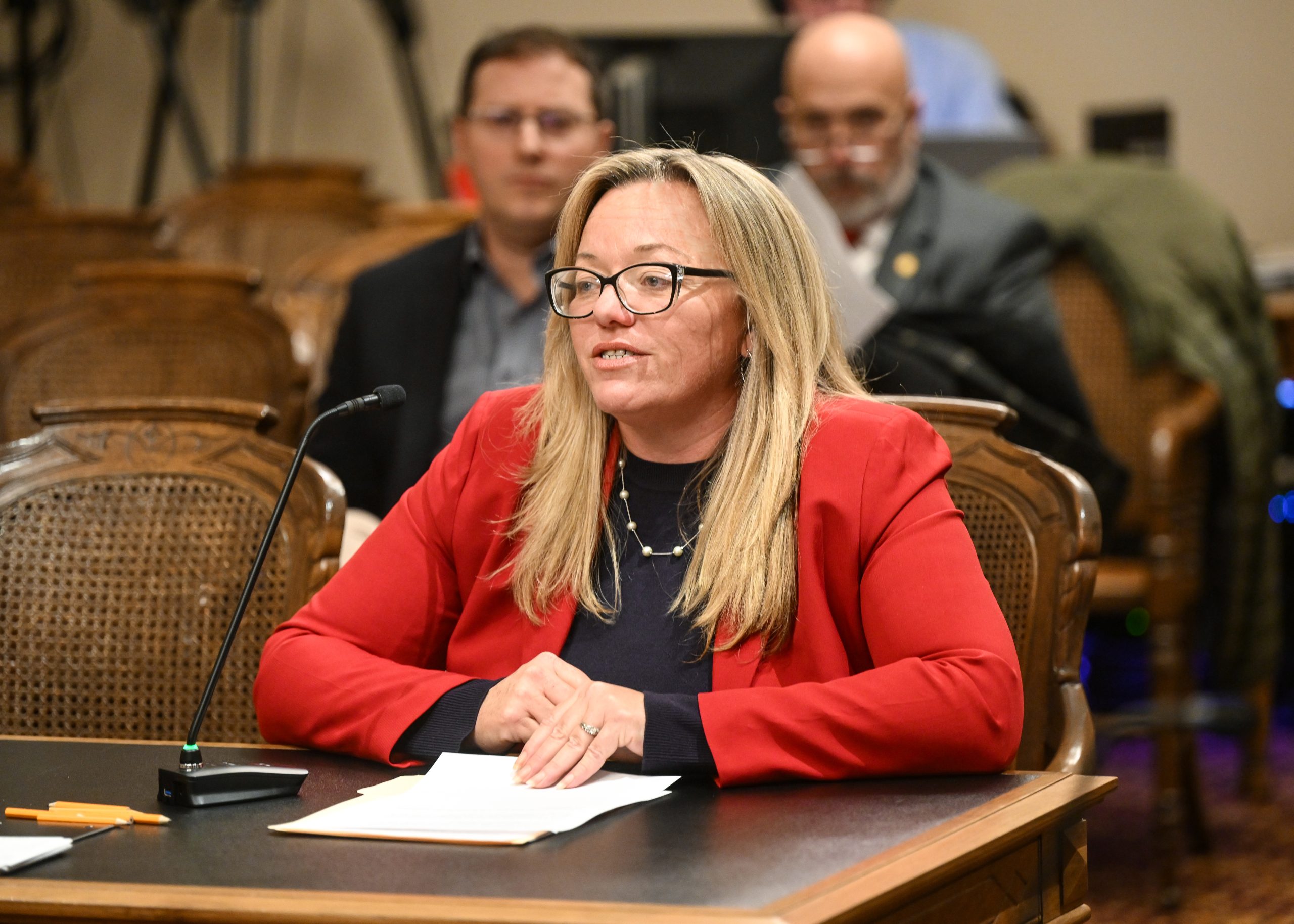
A proposal from state Rep. Jamie Thompson that ensures government efficiency and that Michigan’s most vulnerable continue to have access to resources was advanced Wednesday by the Michigan House.
Thompson’s House Bill 5812 prohibits the Michigan Department of Health and Human Services from requesting or accepting food stamp work requirement waivers from the federal government without approval from the Legislature. The change gives representatives of the people critical oversight of a more than $4 billion program in Michigan.
“This bill works with federal changes and respects taxpayers,” said Thompson, of Brownstown Township. “MDHHS may administer these types of programs, but the Legislature’s responsibility is setting the state budget. MDHHS has a proven track record of increasing costs to state budgets and continuing with an overly vague process for these waivers will create cost overruns, budgeting unknowns and less transparency.
“This does not take food away from seniors. It does not impact individuals with disabilities. It does not punish those caring for young children or those who have encountered hardship. There are thousands of available jobs and training opportunities throughout our state. We should be encouraging able-bodied people to move towards those opportunities and have that independence, not doubling down on policies that keep them disconnected from the workforce. We can provide a strong safety net while also being responsible stewards of public resources, and this bill is that pathway.”
Under federal law, the Supplemental Nutrition Assistance Program includes work requirements, which were modified under the Working Families Tax Cut Act. Current provisions require able-bodied adults ages 18-65 without children under the age of 14 to work, further their education or volunteer at least 20 hours per week.
States can request waivers from the federal government for these requirements, but waivers were issued under broad criteria before the Working Families Tax Cut. In some instances, unemployment rates over 10 percent in an area were categorized as that area having “insufficient jobs.” Several communities and over a dozen counties were still waived from work requirements according to MDHHS documents from earlier this year.
“There must be greater collaboration and communication going forward to ensure available benefits are there for people who are most in need,” Thompson said. “We are simply asking state government to show its work when these waivers are being sought. That accountability is what hardworking taxpayers who we represent and help fund these programs deserve.”
HB 5812 now moves to the Senate for consideration.


© 2009 - 2026 Michigan House Republicans. All Rights Reserved.
This site is protected by reCAPTCHA and the Google Privacy Policy and Terms of Service apply.